RTU Supports, Canopies, and Specialty Miscellaneous Metals: What They Are and Who Handles Them
What Counts as Specialty Miscellaneous Metals
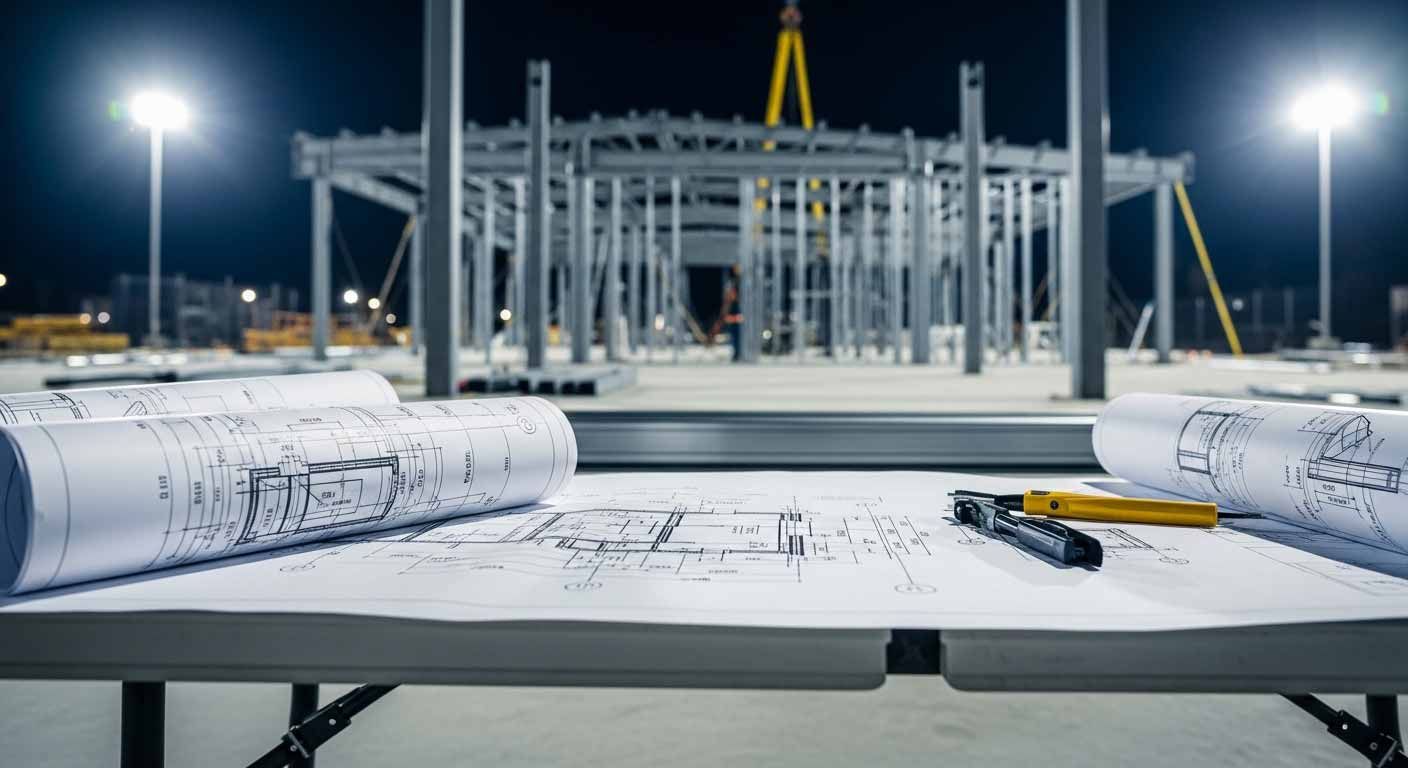
Commercial jobs tend to carry a handful of steel items that are not quite structural and not quite finish work. RTU supports, canopies and fixed roof ladders are three of the usual ones. None of them is large. But each one touches the structure, the roof and at least one other trade, which is why they fall between scopes.
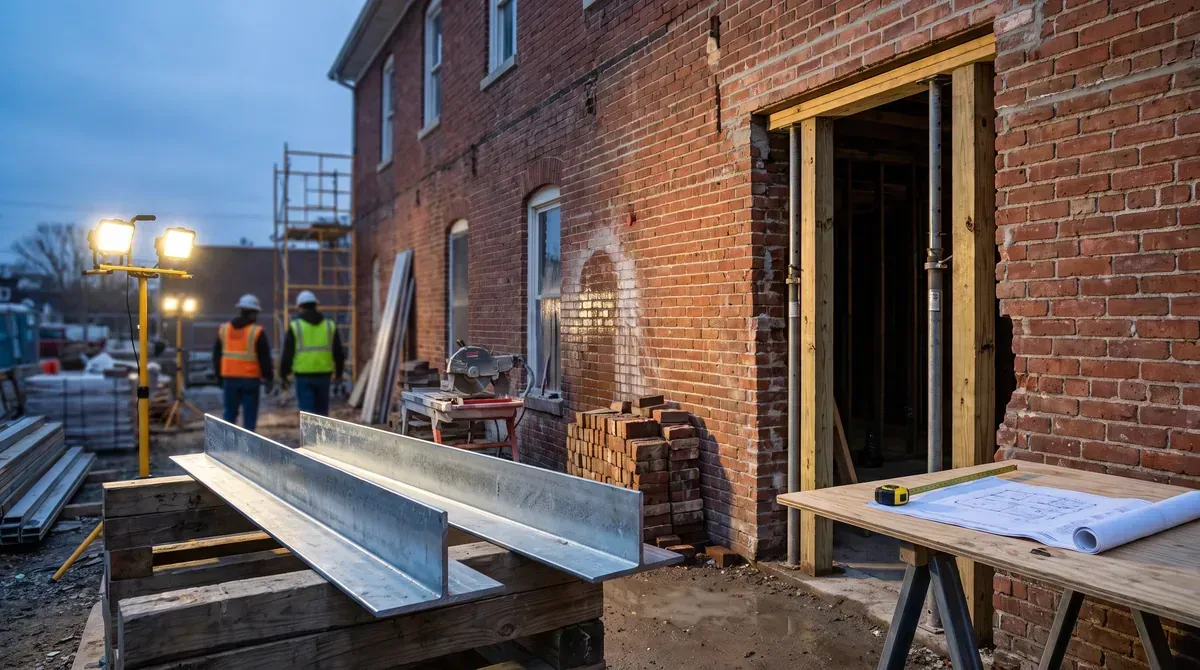
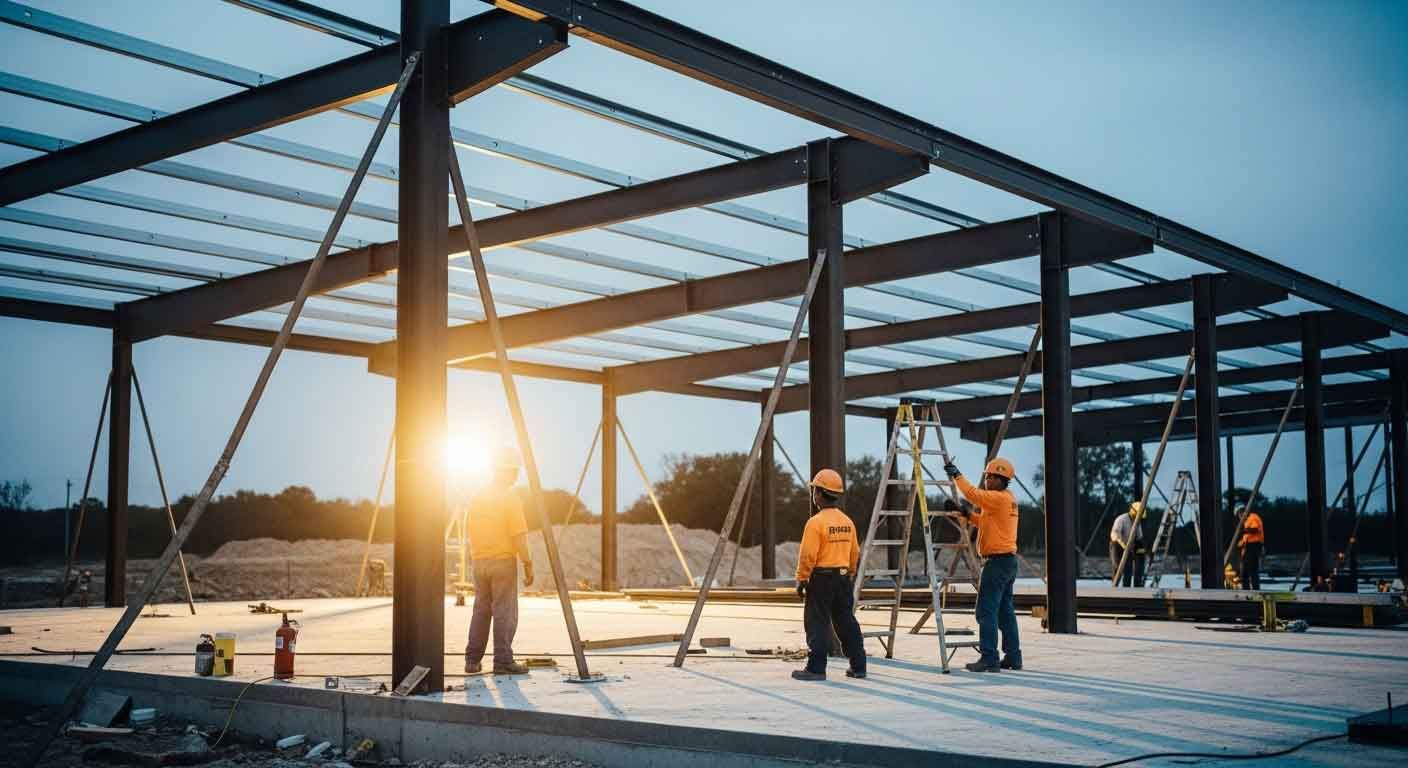
At A.G. Welding, we treat these items as part of the same conversation as the frame. RTU supports, fixed ladders and canopies sit on our structural steel fabrication and erection list right next to columns, beams, joists and deck, because each one either bears on that framing or bolts to it. On a lot of drawing sets, though, they show up elsewhere: the mechanical sheets, an architectural elevation, a roof plan detail.
That split on the drawings is where the trouble starts.
RTU Supports: The Item With Three Possible Owners
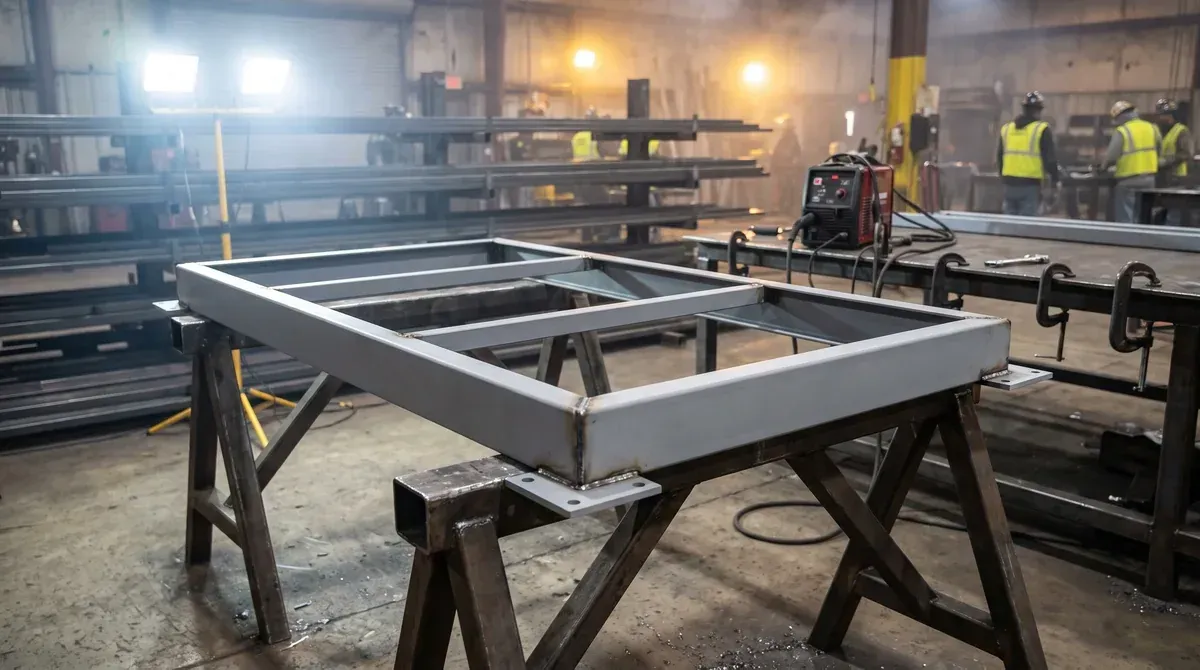
A rooftop unit (RTU) needs something to sit on. Sometimes that is a manufactured roof curb that ships with the unit. Often, especially on renovations or when a new unit does not match the old opening, it is a steel support frame or dunnage: channels or tubes spanning between joists or beams, sometimes with added framing below the deck.
Who provides it is the real question. The mechanical contractor may assume the steel is by others. The steel bid may exclude anything shown only on the mechanical sheets. The roofer needs to know where the frame lands so the curb and flashing can be detailed. If nobody claims the frame at bid time, it becomes an RFI and then a change order, usually about when the crane is booked.
Renovations add a wrinkle. A replacement RTU is often heavier than the one it replaces, or sits on a different footprint, on a roof designed for the old unit. Whether the existing joists can carry it is a structural engineer's call, and the answer may be reinforcing joist chords or adding framing between them. That reinforcement is fabricated, installed steel, and it belongs in someone's miscellaneous metal fabrication or structural scope. Not in a gap.
What we want to see on an RTU support before pricing it:
- The unit's weight and footprint, or at least the mechanical equipment schedule
- Where the unit sits relative to the existing joists or beams
- Whether the engineer has checked the existing framing, and what reinforcement is called out
- Who provides the curb, and who flashes it
With those answered, the frame itself is simple fabrication. Without them it is a guess, and guesses come back as extras. As a City of Houston certified structural steel fabricator, we prepare shop drawings for the frame and any reinforcement from the engineer's design, so the layout can be checked against the mechanical drawings before any steel is cut.
Canopies and Fixed Ladders
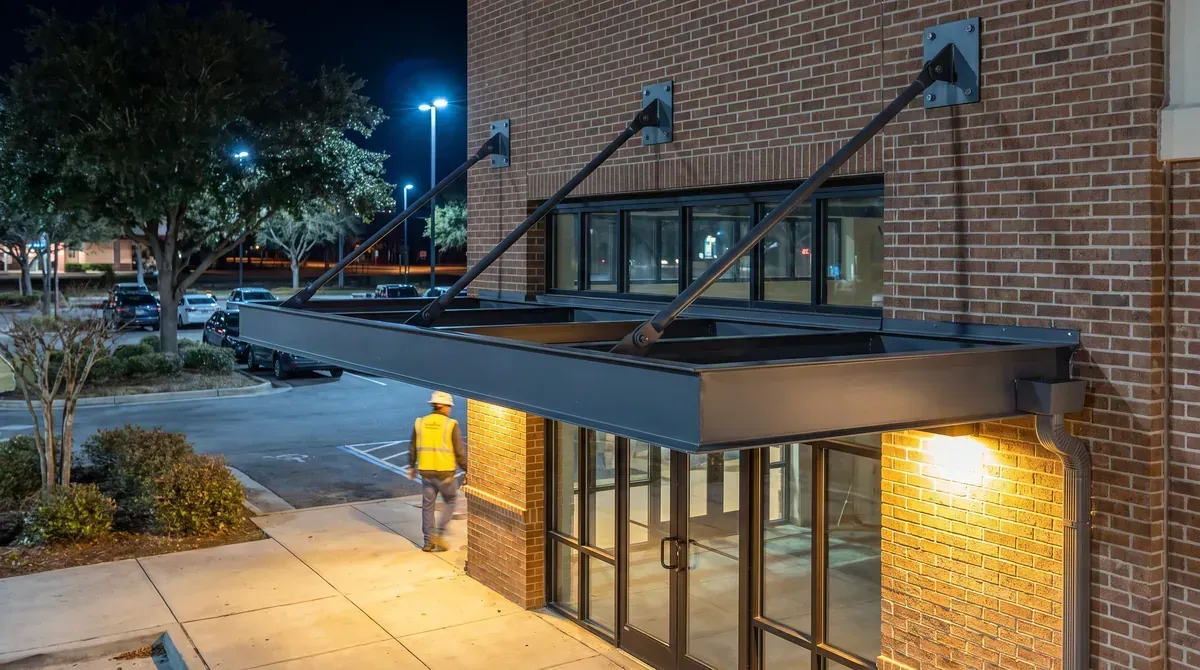
Canopies have the same split personality. They show on the architectural elevations, their connections depend on what is inside the wall, and the electrician and roofer both need something from them. A canopy assigned at bid time is straightforward work. One assumed to be part of the storefront package, the signage package or "by owner" can sit unassigned until the walls are closed.
Fixed ladders are smaller still. A roof access ladder ties into the wall or parapet, lines up with a roof hatch, and has to meet the OSHA and building code requirements that apply. It usually appears as an architectural detail, which makes it easy to leave off a steel bid.
Why These Items Miss the Early Budget
Specialty miscellaneous metals get overlooked for a few plain reasons:
- They live on non-structural sheets. RTU frames show up on mechanical drawings, canopies and ladders on architectural ones. An estimator working from the structural set may not see them at all.
- Each one is small. Next to the frame, a ladder or equipment support looks like rounding error, so it gets carried as an allowance or left out.
- Responsibility is written loosely. "By others" and "by mechanical" in a spec or a bid leave the question open.
- They depend on late decisions. The final RTU selection, the canopy finish, the hatch location. Until those settle, there is nothing to detail.
Getting Them Onto One Scope
The fix is mostly bookkeeping done early. Read the mechanical and architectural sheets for steel, not just the structural set. List each RTU support, canopy, ladder and piece of reinforcement by name in the steel scope, and say who provides the curb, the flashing and the anchors. Ask the engineer to confirm the existing roof framing before a replacement unit is ordered, not after it ships.
Bundling these items with the structural steel contractor also cuts down on handoffs. When the same shop details the frame, the RTU supports and the canopy connections, the shop drawings show how they fit, and one contractor answers when a field condition does not match. Separate packages can work. But each extra contractor on the roof is another line on the coordination list.
Sizing members and connections stays with the engineer of record. Our part is to fabricate and install to those drawings, raise questions when the site does not match, and spell out in the proposal what is included and what is assumed.
How A.G. Welding Handles Specialty Miscellaneous Metals
A.G. Welding has fabricated and erected structural steel and miscellaneous metals in Houston for nearly 40 years, on tenant build-outs, renovations and ground-up buildings up to two stories. RTU supports, canopies and fixed ladders are part of that work, from shop drawings through shop fabrication and installation. Our written proposals list these items by name, so GCs see what is covered before the job starts, not on the roof.
Contact A.G. Welding to discuss RTU supports, canopies or other specialty metals on your next commercial project by requesting a free estimate or calling us at (713) 988-4200.