Commercial Fencing Materials Compared: Iron, Aluminum, Chain Link, and Vinyl
How to Choose the Right Fencing Material for a Commercial Property
Material selection for commercial fencing and gates comes down to four things: what the fence needs to do, how much upkeep the property can support, how the installation connects to existing or planned gate systems, and whether the project calls for custom fabrication or standard pre-fabricated panels. Getting those questions answered early prevents the more expensive problem of replacing fencing that was never suited to the job.
We've installed commercial fencing across the Houston area on projects ranging from a few hundred feet of ornamental iron at a single entry point to several thousand feet of perimeter security fencing. What the right material looks like depends on the property type. What works at a retail center is not necessarily what works at a warehouse or storage facility.
Four materials come up most often on commercial properties:
- Iron and steel (custom fabricated): High strength, fully customizable, long service life, requires periodic coating maintenance to prevent rust
- Aluminum: Lightweight, rust-resistant, available in pre-fabricated ornamental profiles, lower maintenance than iron
- Chain link: Most cost-effective per linear foot, durable, practical for large perimeters and secondary areas
- Vinyl: Low maintenance, suitable for privacy applications, not recommended for high-impact zones
What Each Material Offers in Durability, Security, and Maintenance
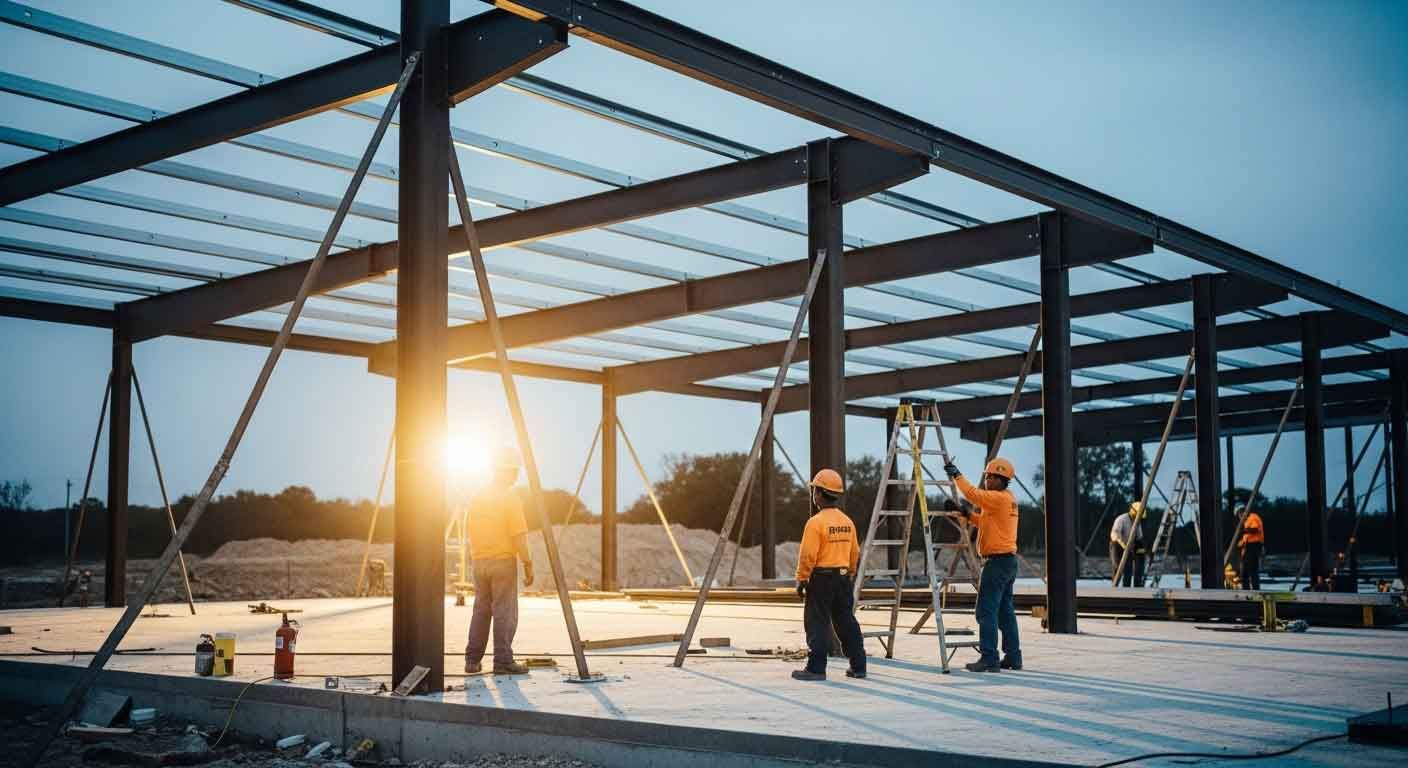
Iron and steel are the strongest option. Custom fabricated steel fencing falls under our miscellaneous metal fabrication scope, and it can be built to any height, picket spacing, or profile the project requires. One real tradeoff is maintenance. Steel exposed to Houston's humidity without proper protective coating will rust at cut edges, weld points, and fastener locations. Properties that start with quality powder coating or hot-dipped galvanizing and do periodic touch-up work get decades of service from iron fencing. It is also a material where targeted commercial welding repair can extend the life of a damaged section without replacing an entire run.
Aluminum is the lower-maintenance alternative for ornamental applications. It does not rust and holds up well in humid climates. Pre-fabricated aluminum panels come in standard ornamental profiles and work well for most commercial entry and perimeter applications. Aluminum is lighter and less rigid than steel, which matters in high-impact or high-security situations.
Chain link is the most practical choice for securing large areas where appearance is secondary. It is durable, cost-effective, and straightforward to repair after impact damage. Many commercial properties use chain link along secondary perimeters and utility areas while using a more finished material at primary entries or street-facing fencing.
Vinyl performs best in lower-traffic settings where privacy and clean appearance are the priorities. It can crack under impact, and lower-grade products fade and weaken in direct sunlight over time. For high-use commercial perimeters, metal options hold up better.
When Custom Fabricated Iron or Steel Makes Sense
Pre-fabricated panels cover a wide range of standard commercial applications. Custom fabrication is worth considering when:
- Site conditions include non-standard grades, angles, or dimensions that stock panels cannot accommodate
- Design requirements call for the fence to match existing architectural ironwork on the building
- Security specifications require picket spacing, anti-climb profiles, or heights outside standard stock options
- A custom-fabricated gate needs to integrate cleanly with the fence line
Cost difference between custom and pre-fabricated is real. But properties with challenging site conditions or specific aesthetic requirements often get a better result from custom work than from adapting panels that were not designed for the situation.
How Gate Integration Affects Your Material Choice
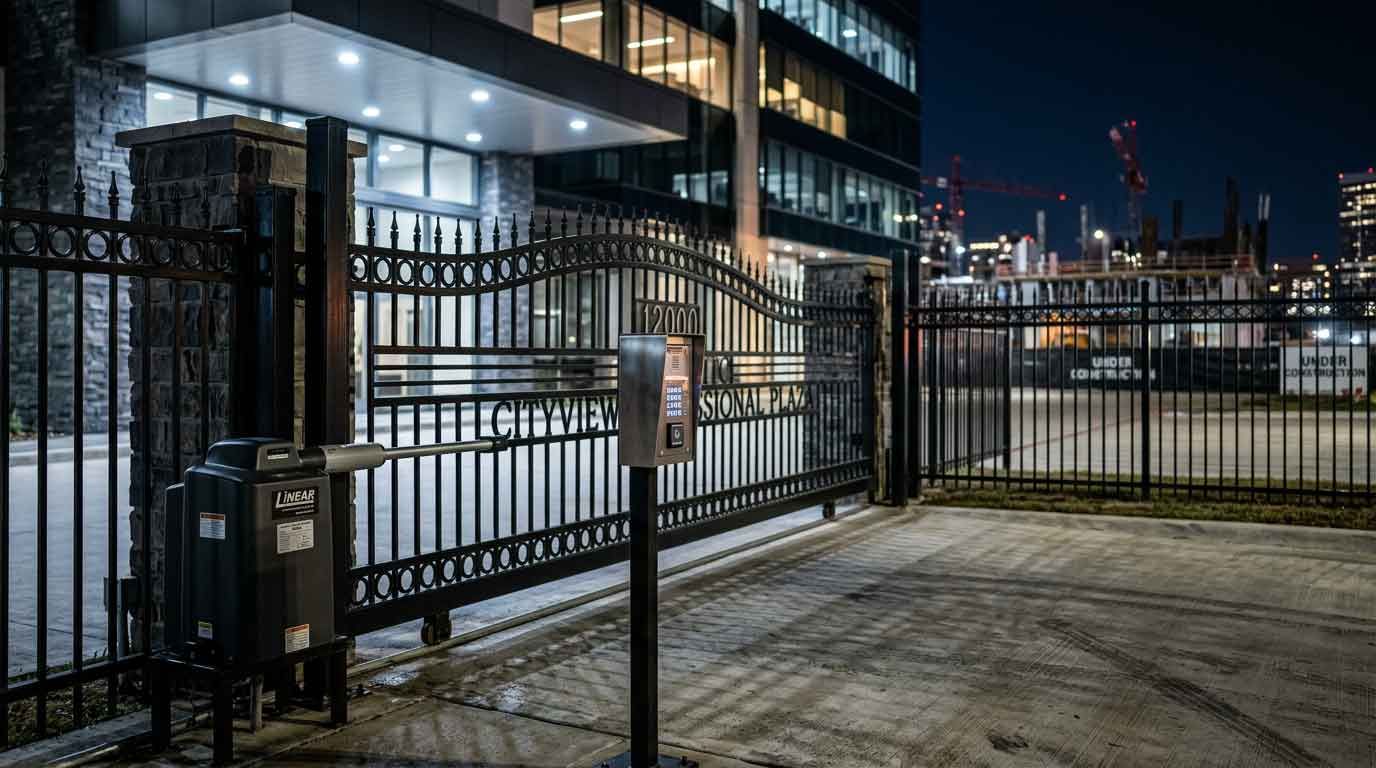
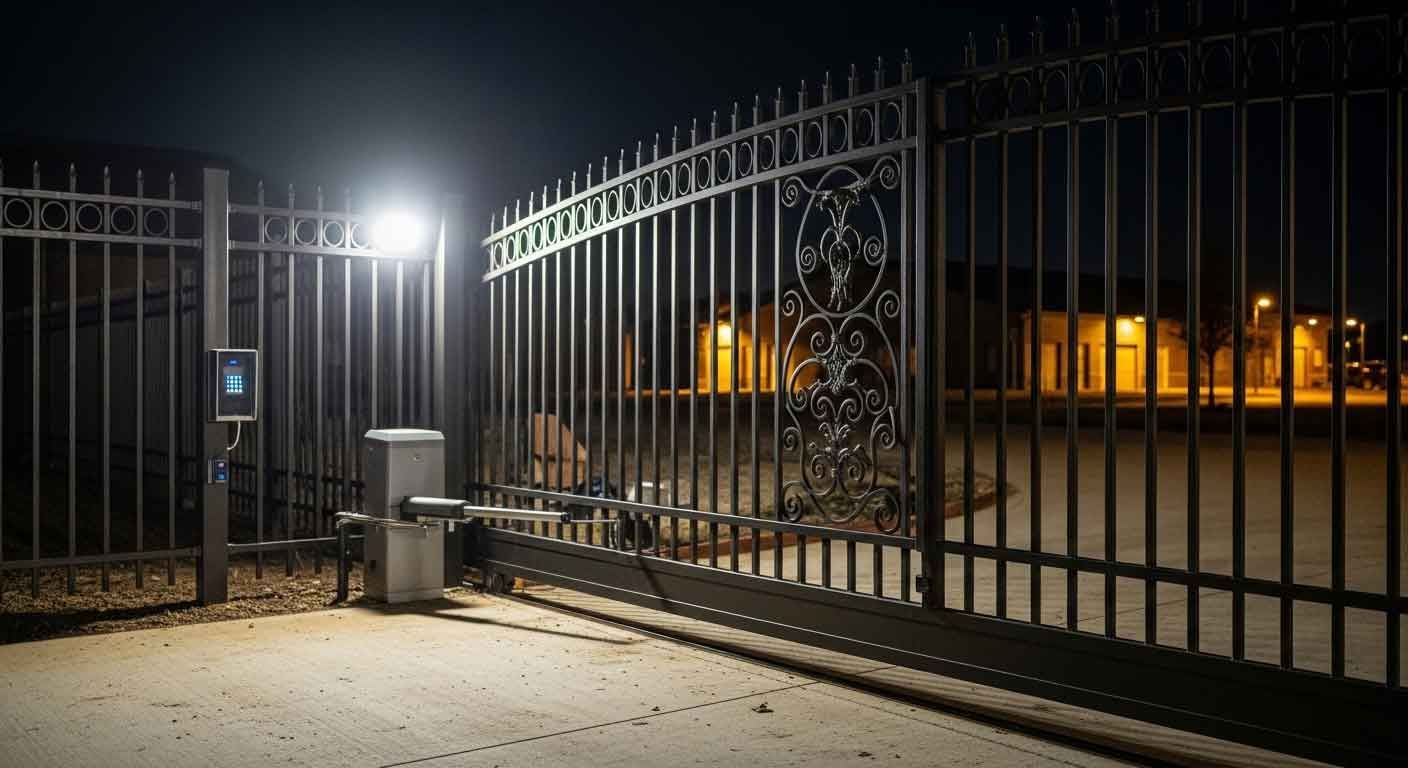
Automated gate systems place load on the gate frame and the posts it connects to. A heavier gate requires heavier posts, deeper footings, and a higher-capacity operator. Gate material and fence material need to be matched to the hardware early, not after installation begins.
Mixing materials is common and often practical. A chain link perimeter with a custom iron drive gate and an automated slide operator is a standard combination for commercial properties. But the gate and operator need to be specified together, and the post and footing requirements for the gate section are different from the rest of the perimeter run.
Access control options include electric and solar-powered operators, keypad entry, RFID card readers, and remote systems. Configuration depends on daily cycle volume, whether pedestrian access needs to be separated from vehicle access, and how the gate integrates with any existing security cameras or intercoms on the property.
Frequently Asked Questions
What fencing material is most common for commercial properties in Houston? Chain link and ornamental iron are both common, depending on the application. Chain link is typically used where security and cost efficiency matter most. Iron and aluminum are used where curb appeal and property appearance are also factors.
Can a damaged iron fence be repaired rather than replaced? Often yes. Welding repair can address broken welds, damaged pickets, or post damage in most iron and steel fencing. Repair is typically less expensive than replacement and makes sense when the damage is isolated rather than widespread.
Do automated gate operators work with all fence materials? Gate operators are specified based on gate weight, size, and daily cycle volume rather than the perimeter fence material. Most commercial automated gate installations use a heavier gate material regardless of what the surrounding fence is made from.
Working with a Single Fencing Contractor
A commercial fencing project involving multiple materials, custom fabrication, and gate automation has a lot of moving parts. Working with a single contractor who handles all of it, from estimate through installation, reduces the coordination involved.
A.G. Welding provides turnkey commercial fencing and gate installation in the Houston area across all of these materials. That includes custom-fabricated iron and steel work, supply and installation of aluminum, chain link, and vinyl, and gate integration with automated operators and access control systems. We are a City of Houston certified fabricator with nearly 40 years of commercial ironwork experience.
Contact A.G. Welding to discuss your commercial fencing project by requesting a free estimate or calling us at (713) 988-4200.