Dumpster Enclosure Gates: Why They Break and How to Build Ones That Last
The Hardest-Working Gates on the Property
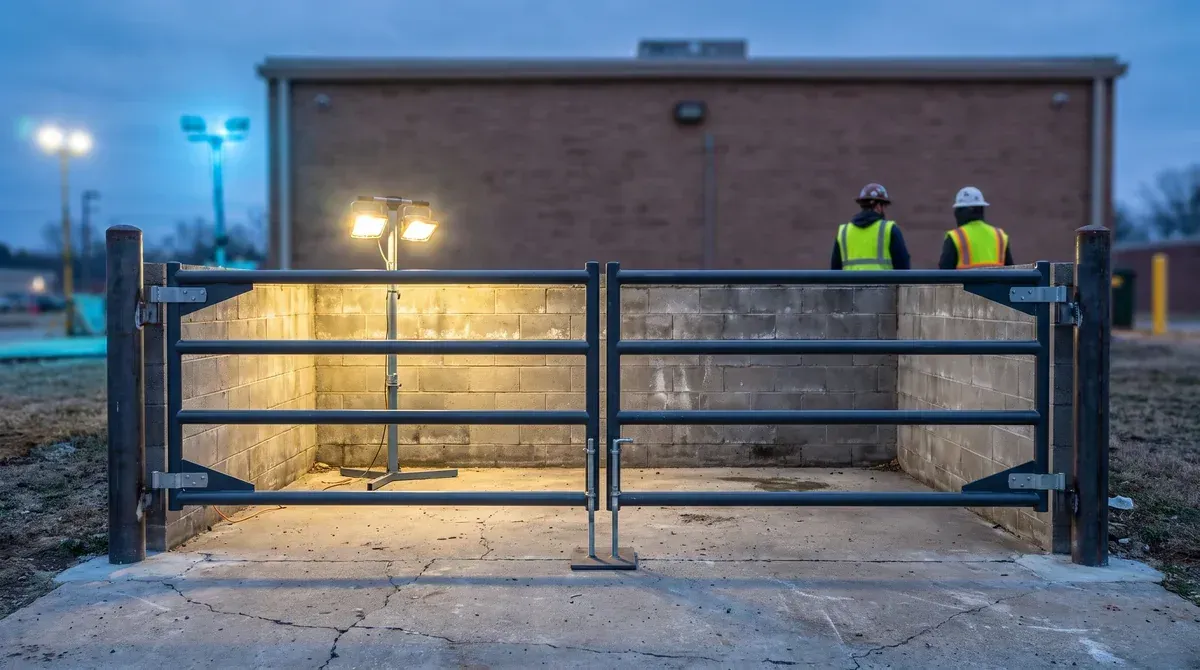
Dumpster enclosure gates take more abuse than almost any other metalwork on a commercial property. They get swung open and shut on each pickup, left flapping in the wind, bumped by trucks, propped open with whatever is handy, and ignored until one of them is dragging on the concrete or hanging off a single hinge.
Property managers know the pattern. A set of gates looks fine for a while, then starts to sag, then won't latch, then gets tied shut with wire. The repair calls start, and before long somebody asks whether it's time for a new set.
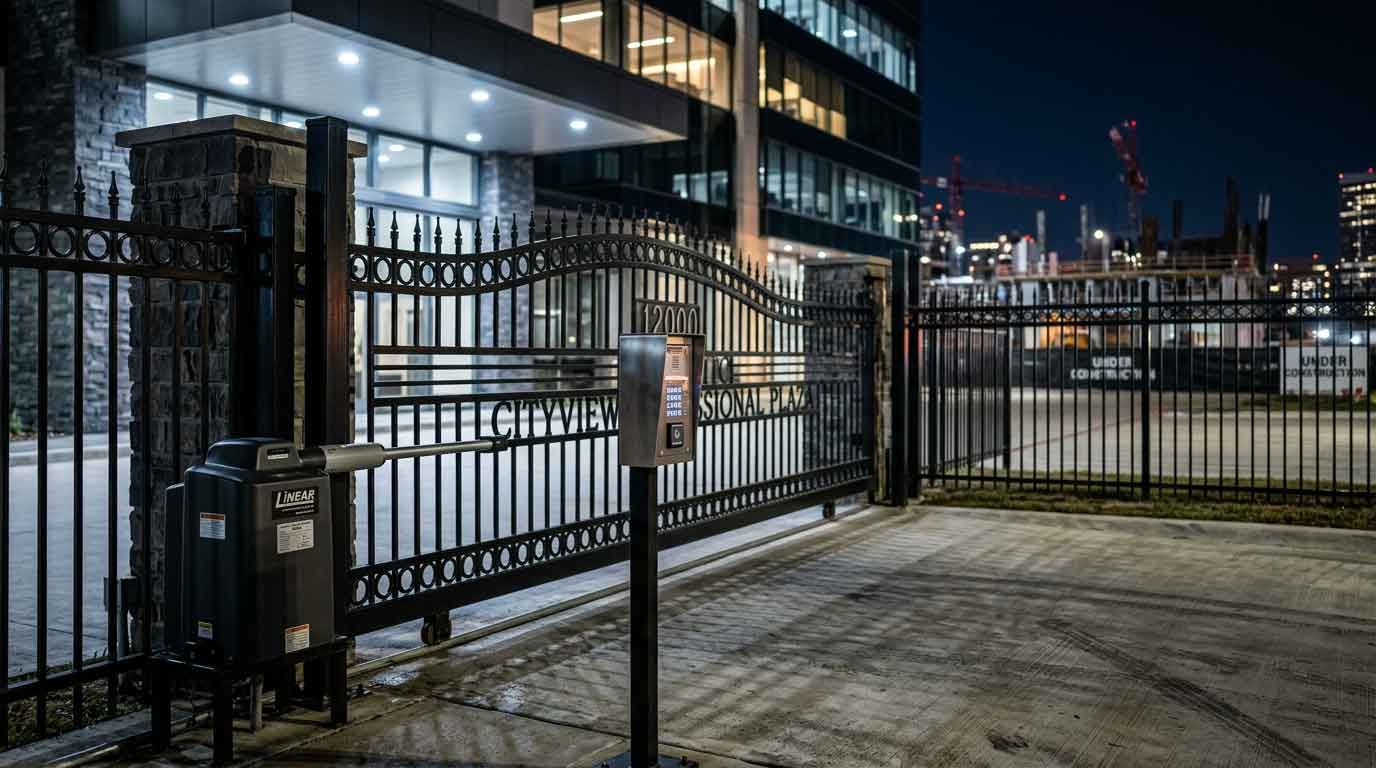
At A.G. Welding, dumpster gates are part of our commercial fencing and gates work, and we build and repair them for commercial properties around Houston.
What we've found over nearly 40 years of commercial metalwork is that many dumpster gate failures trace back to a few predictable weak points. Build those right, and the gates hold up to the service truck instead of losing to it.
Why Dumpster Enclosure Gates Sag, Drag and Break
Here is where they usually give out:
- Hinges. Light hinges wear fast under a heavy leaf that swings wide open on each pickup. Once a hinge wears, the gate drops at the latch side and starts dragging.
- Posts. A post set too shallow, or one that takes a hit from a truck, leans. Even a slight lean throws the whole gate out of line.
- Frames. A light frame with long, unbraced leaves racks over time. Without a diagonal brace or enough frame depth, the far corner drops.
- Bolted connections. Bolts work loose from vibration and impact. All-welded frames hold their shape longer.
- Missing hold-opens. A gate with nothing to hold it open swings back into the truck's path or gets blown shut by the wind, and that is how a lot of gates get hit.
- Rust at the bottom. The bottom rail and the posts sit in water, food waste and whatever else collects in the enclosure. Thin or uncoated steel corrodes there first.
Many of these can be repaired. A sagging gate can often be rehung with heavier hinges, a cracked weld rewelded, a bent leaf straightened, and a leaning post reset. Our commercial welding repair crews handle that kind of work on site. But when the frame is light and rusted through, repairs tend to buy time rather than solve the problem.
What a Gate Built for Daily Service Looks Like
If a property is replacing dumpster enclosure gates, these are the features worth specifying:
- Heavy, weld-on hinges sized for the weight of the leaf, not light surface-mounted hardware.
- Steel posts set deep in concrete, or anchored solidly to a reinforced masonry enclosure.
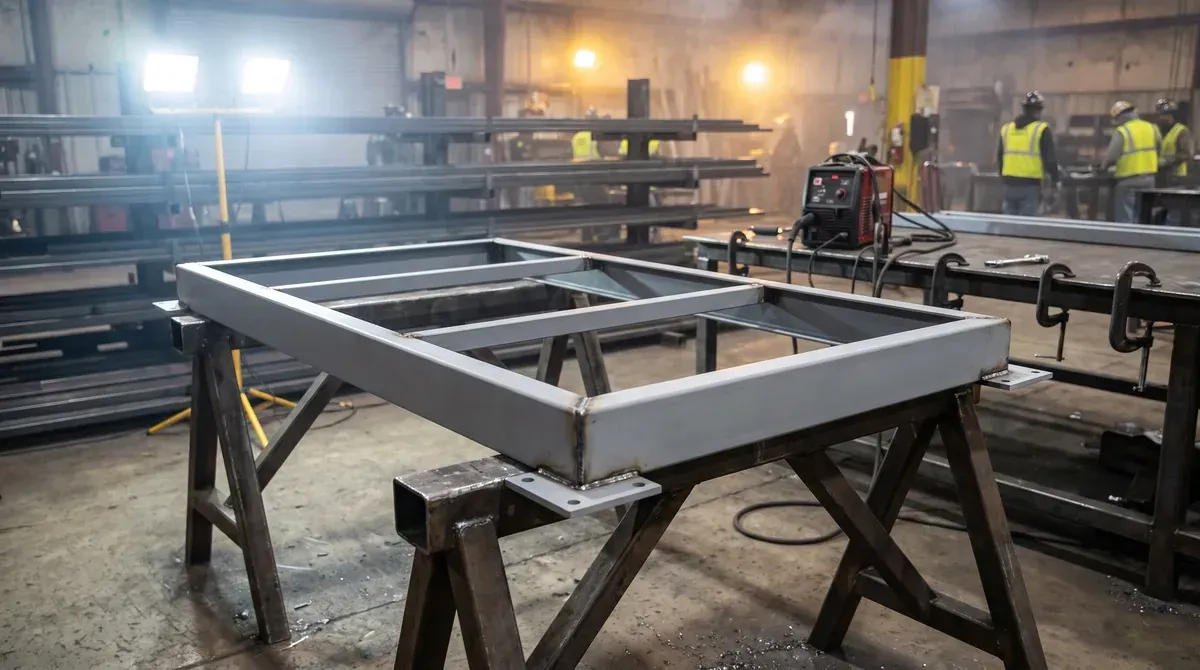
- An all-welded frame with bracing, so long leaves keep their shape.
- Cane bolts or drop rods with sleeves in the slab, to hold the gates closed and to pin them open on pickup day.
- Gate stops or hold-open hardware, so open leaves stay out of the truck's path.
- A durable finish, galvanized, powder coated or both, with the bottom of the frame given extra attention.
- Infill that suits the site: steel sheet or slats for screening, or open frames where screening isn't required.
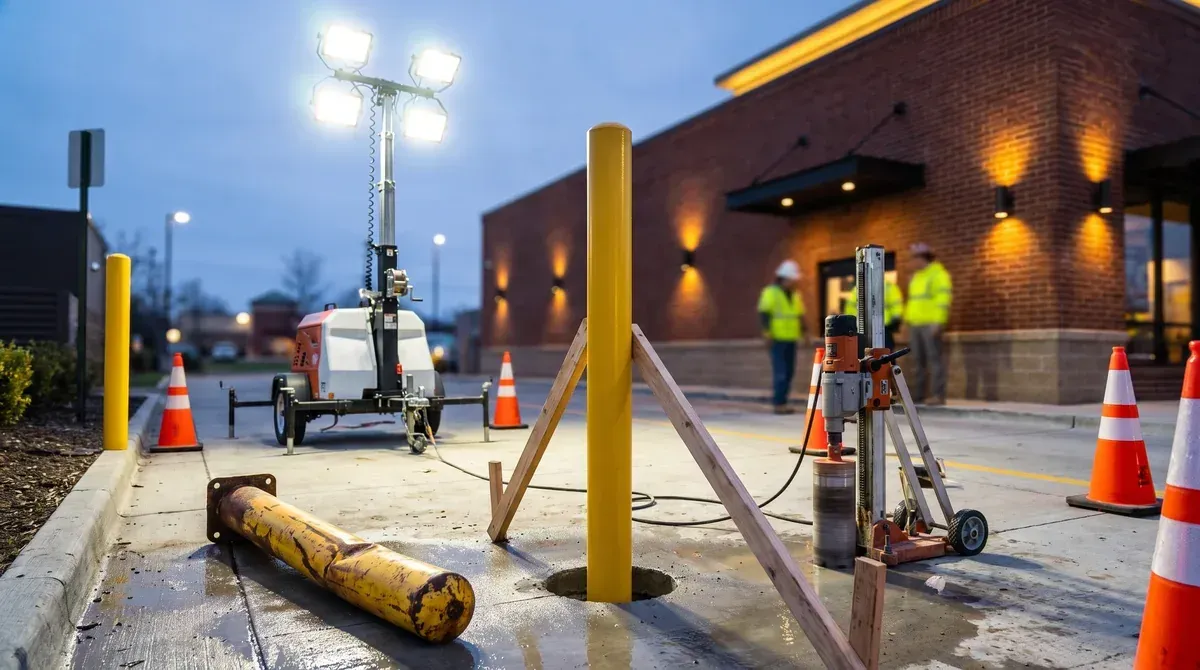
Some properties add bollards at the enclosure corners to keep trucks off the posts. It's a small addition that protects the whole installation.
Getting the Next Set Right
The cheapest dumpster gates are often the most expensive over a few years, because they come back as repair calls. A set built with the right hinges, posts and hold-opens costs more up front and tends to stay quiet afterward.
Work With A.G. Welding on Dumpster Enclosure Gates
A.G. Welding fabricates, installs and repairs dumpster enclosure gates for commercial properties across the Houston area. We look at the enclosure, the posts and the way the service truck uses the site, and give you a detailed written proposal for the repair or the replacement, whichever makes more sense.
Contact A.G. Welding to discuss new or repaired dumpster enclosure gates by requesting a free estimate or calling us at (713) 988-4200.