Automated Gate Systems for Commercial Properties: What to Know Before You Choose
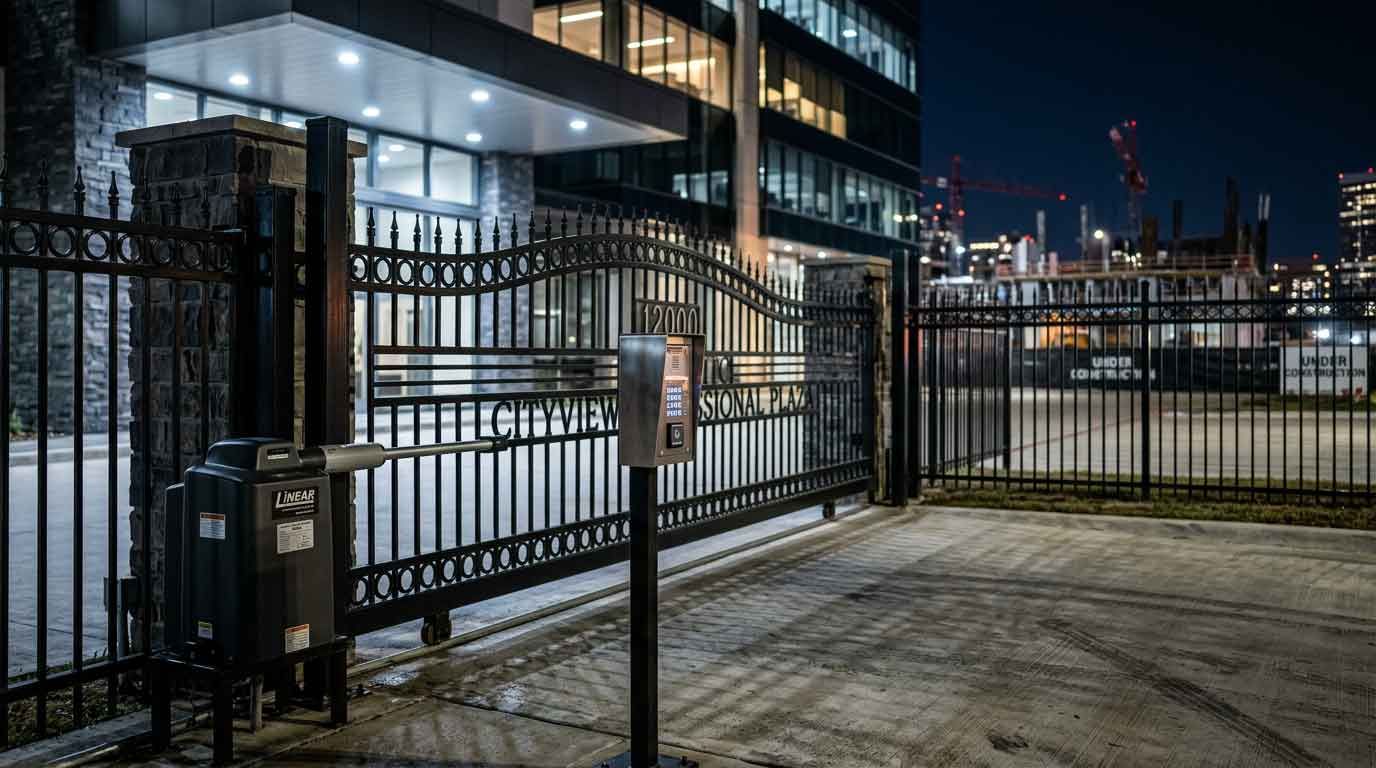
How Automated Gate Operators Work
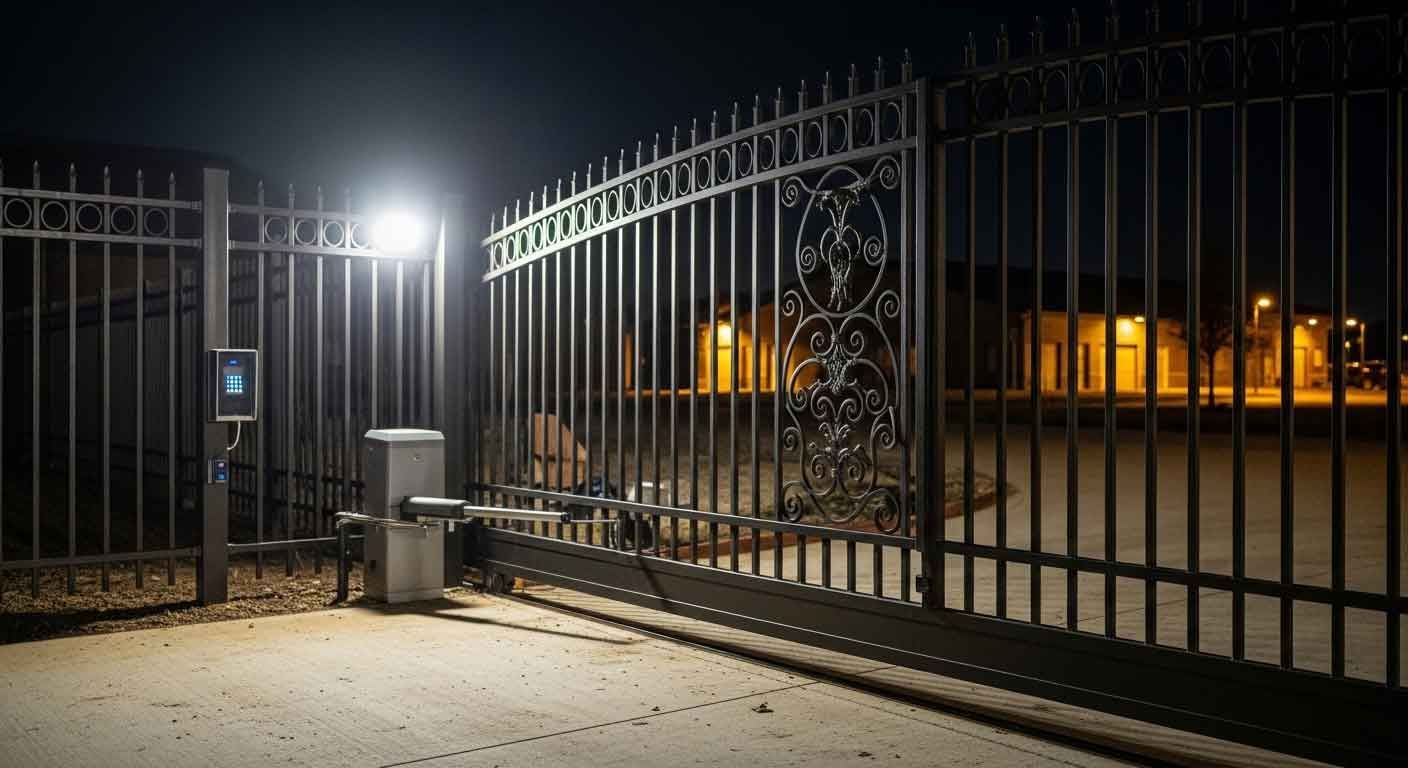
Gate automation is not a single product. It is a system made up of several components working together: the gate itself, the operator that drives movement, the power source, and the access control hardware that determines who gets in.
The operator is the mechanical core of the system. It connects to the gate and uses an electric motor to drive movement along a track (for slide gates) or on a pivot (for swing gates). Operators are rated by duty cycle, which refers to how many open-and-close cycles they can handle per day before overheating or wearing prematurely. A residential-grade operator on a busy commercial entrance will not last. Commercial-grade operators are built for higher cycle counts and are the right choice for any property with regular vehicle traffic.
When A.G. Welding handles commercial fencing and gates as a turnkey project, we fabricate the gate, source and install the operator, wire the power supply, and connect the access control hardware under one contract. That single-contractor approach removes the coordination gaps that come from hiring a fence company, a gate fabricator, and an electrician separately.
If an existing operator has failed or a gate panel is damaged, commercial welding repair is often a faster and more cost-effective option than replacing the full gate assembly. Not every gate problem requires starting over.
Slide Gates vs. Swing Gates: Matching Configuration to Your Property
The first decision most property owners face is whether to install a slide gate or a swing gate. Both automate well, but they suit different site conditions.
Slide gates move horizontally along a track parallel to the fence line. To accommodate a 20-foot drive gate, you need roughly 20 feet of clear fence line for the panel to retract into when open. Slide gates are the better fit for:
- Sites with limited street setback or shallow entry depth
- High-traffic entrances where opening speed matters
- Driveways with grade changes or cross-slope
- Locations where a swinging panel could block traffic or pedestrians
Swing gates pivot on hinges and open inward or outward. They require clear space within the swing arc. They work well for:
- Properties with adequate depth behind the gate opening
- Lower-traffic entries where speed is less of a factor
- Site layouts where a slide track would be difficult to install
Gate configuration is part of the design conversation, not an afterthought. For custom gate fabrication, the frame, hinge placement, and track or post requirements are built into the metalwork before anything reaches the property. Getting this right early prevents problems during installation.
Solar-Powered vs. Electric Operators
Most automated gate operators run on standard AC power from a dedicated electrical circuit. That requires running conduit from the building's electrical panel to the operator location, which adds to project cost but produces a reliable, consistent power supply.
Solar-powered operators use a panel to charge a battery bank that runs the operator. They are a practical option when:
- Running electrical conduit to the gate location is costly or disruptive
- The property has good sun exposure
- The gate operates at a moderate daily cycle count
Solar is not the right choice for every property. High-traffic entrances that cycle the gate many times per day can drain battery reserves faster than the panel replenishes them, particularly through overcast stretches. In Houston's climate, solar performs well for many commercial applications, but the gate's expected duty cycle should be assessed honestly before committing to it.
Access Control Options
The operator moves the gate. Access control determines who triggers it. The right configuration depends on who needs access, how often, and whether that access needs to be logged or managed remotely.
Common access control options for commercial properties include:
- Keypads — pin code entry, simple to install, easy to update
- Card readers and key fobs — each user carries an individual credential that can be granted or revoked without changing hardware
- Intercoms with camera — visitors identify themselves before entry is approved, useful for managed or secured properties
- Loop detectors — vehicle sensors buried in the pavement that trigger the gate for exit traffic, no credential required
- Remote controls — standard for staff or regular delivery vehicles needing hands-free entry
More sophisticated systems connect to property management software or security platforms and allow access logs, timed entry windows, and remote management from a phone or computer. Access control hardware wires into the operator's control board, so compatibility between components is confirmed during the design phase, not worked out on the day of installation.
What a Turnkey Gate Project Looks Like
A commercial gate project starts with a site visit. We look at the fence line, the gate opening width, the available space for the gate to operate, the slope of the driveway, the distance from the electrical source, and the access control requirements.
From there, we prepare a written proposal covering gate fabrication, operator selection, power supply, and access control hardware under a single scope. One contract, one point of contact, one company accountable for making the system work correctly.
Fabrication happens in our shop. The gate is built to the measurements and specifications from the site visit, primed and finished, then transported to the property for installation. Operator mounting, electrical connection, and access control programming all happen on site. Before we leave, the full system is tested and the property owner is walked through how to operate and adjust it.
Getting It Right from the Start
The decisions about gate configuration, power source, and access control are easier to make before fabrication begins than after. A well-scoped project avoids adjustments mid-installation, and a detailed written proposal makes sure everyone understands what is included before work starts.
A.G. Welding has been handling commercial gate and fencing projects in the Greater Houston area for nearly 40 years. We handle the full project under one contract, from design and fabrication through operator installation and access control programming.
Contact A.G. Welding to discuss your commercial gate project by requesting a free estimate or calling us at (713) 988-4200.