Commercial Steel Stairs in Houston: What GCs Need to Know About Code, Design, and Coordination
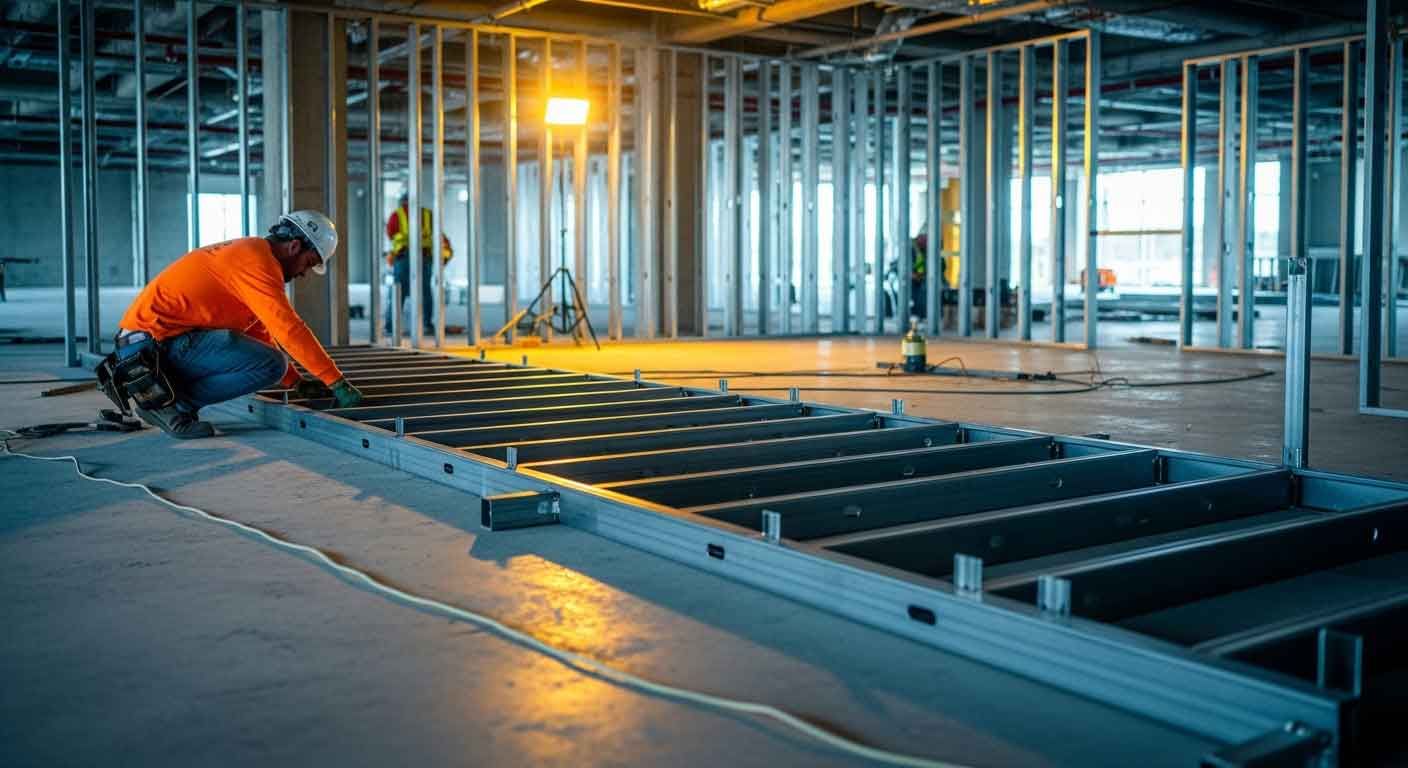
A.G. Welding • March 19, 2026

What the IBC Requires for Commercial Stairs

Steel stairs on commercial projects are not complicated to scope correctly, but they do require the GC to understand what the code requires before the subcontractor can do much useful work. The International Building Code establishes the standards that govern commercial stairways in Houston, and a few of these requirements have real implications for how the stair scope is designed and bid.


Width is calculated by occupant load, not guessed. For non-sprinklered buildings, the IBC calls for 0.3 inches per occupant served by the stair. For sprinklered buildings with alarms, that factor drops to 0.2 inches per occupant. In either case, the minimum width is 44 inches. Stairways serving an occupant load of fewer than 50 can go as narrow as 36 inches.


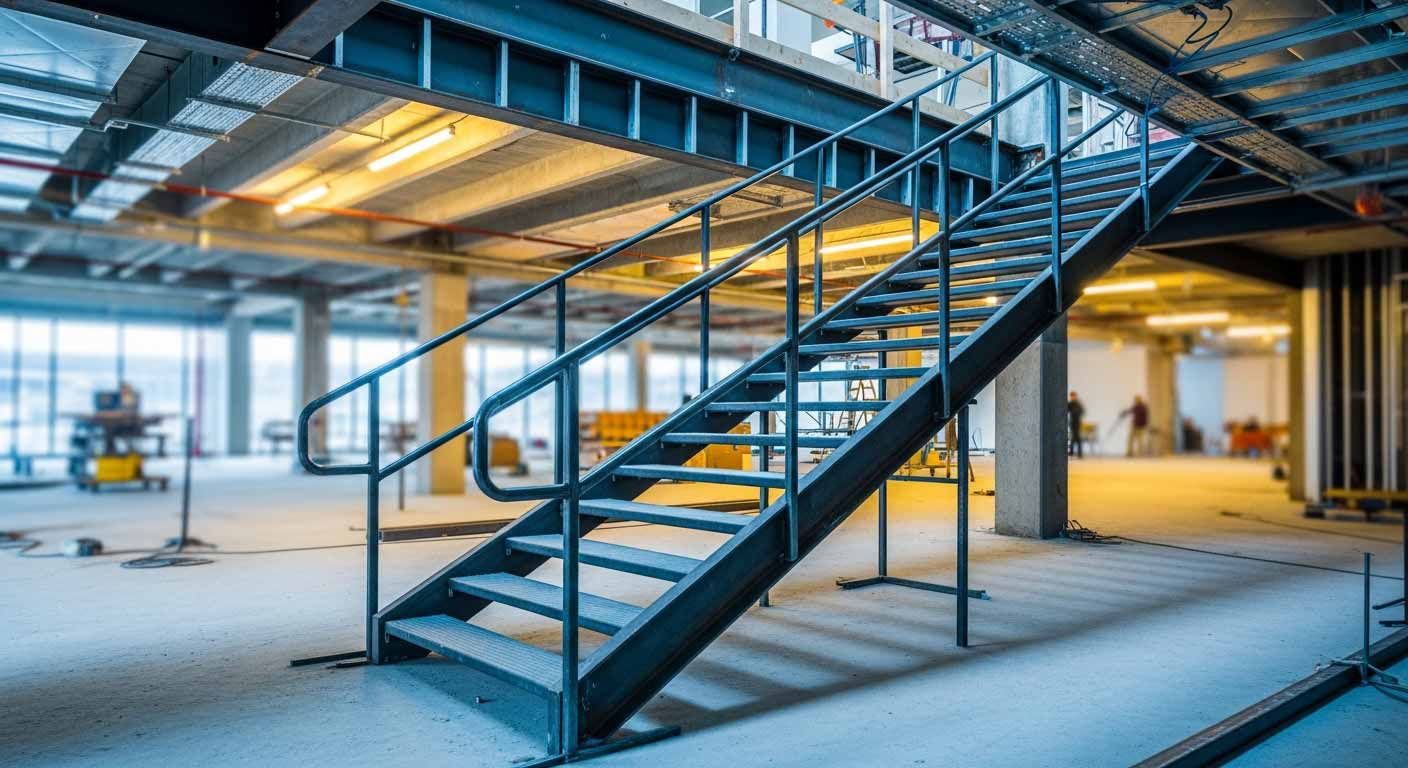
The dimensional requirements are clear: maximum riser height of 7 inches, minimum riser height of 4 inches, minimum tread depth of 11 inches, and minimum headroom clearance of 80 inches measured vertically from the nosing line. Handrails are required on both sides of any commercial stair, mounted between 34 and 38 inches above the tread nosings. Guards at open sides must be at least 42 inches high. Tread nosings require a visual contrast marking under IBC Section 504.6, which matters for inspection and occupancy sign-off.


Each flight of stairs is limited to 12 feet of vertical rise before a landing is required. The landing width must match the stair width. These are not options or design decisions. They are code minimums that a fabricator is building to, and a shop that is working from incomplete or inaccurate field dimensions will have problems at installation.


We fabricate commercial steel stairs for tenant build-outs, renovations, and ground-up projects across the Houston metropolitan area. We handle straight stairs, L-shaped stairs with landings, curved stairs, and spiral stairs, and we work within project specifications on all of them. But the quality of what comes out of our shop is directly tied to the quality of what the GC provides going in.


What a Steel Stair Subcontractor Needs from the GC to Quote Accurately

This is where stair scopes run into trouble on commercial projects. A subcontractor cannot produce an accurate proposal for steel stairs without specific information, and that information is not always available at the time bids are being assembled.


At minimum, to quote a steel stair scope, we need:

  • Floor-to-floor height (confirmed field measurement, not a plan dimension)
  • The number of stairs and any landing configurations required
  • Clear width requirements per the IBC calculation for that specific occupant load
  • Guard and handrail specifications, including whether handrails are structural or decorative
  • Tread type (grating, checker plate, concrete-filled pan, or other)
  • The finish specification, whether that is prime and paint, powder coat, or galvanized


If any of these are not confirmed, the proposal is going to have assumptions built into it. Assumptions create scope disputes. We would rather ask the questions upfront than have that conversation later.


A common situation on tenant build-outs is that the GC sends plans that show stair location and a rough section, but the final floor heights have not been confirmed in the field and the tread specification is listed as "by architect" or "TBD." We can quote off the plans with noted assumptions, but we are clear about what is locked and what is not. When the details change, the price changes. That conversation is easier to have before fabrication begins than after.


How Stair Fabrication Fits Into the Project Schedule

Steel stairs are typically part of the miscellaneous metals scope, separate from the structural steel scope even when both are carried by the same subcontractor. On a tenant build-out, the structural steel goes in first. Stairs often follow in a second phase, once the structural framing is confirmed and field dimensions can be verified.


This sequencing matters for GCs managing tight finish schedules. The fabrication timeline for a standard commercial stair in our shop typically runs two to four weeks from when final dimensions and specifications are confirmed. That clock does not start until the field measurements are verified and the design is signed off. If a GC is working toward a certificate of occupancy and the stairs are on the critical path, that verification step needs to be built into the schedule, not treated as a formality.


We have worked on build-outs where the GC did not realize stair fabrication ran independently from structural steel lead times, and the oversight created a schedule problem downstream. Coordinating early about what information the stair sub needs and when they need it avoids that. It is a straightforward conversation, and it is worth having at the beginning of the project.


The other trades that typically interact with a stair scope are the drywall and finish contractors (who work around the stair opening), the flooring contractor (who needs to know the tread finish), and sometimes the mechanical or electrical teams if conduit or sprinkler heads are routed near the stair shaft. Calling those coordination points out in the early project meeting prevents interference later.


See the structural steel scheduling article for a more detailed look at how the steel scope integrates with the broader project timeline on Houston commercial projects.


Working Through a Stair Scope with A.G. Welding

We are a City of Houston certified structural steel fabricator serving the commercial construction market across the Houston metropolitan area. We handle the full stair scope, from shop drawings through fabrication and erection, and we provide detailed written proposals that spell out what is included, what the tread and finish specifications are, and what the timeline looks like from confirmation of dimensions through installation.


For GCs who are coordinating a stair scope alongside a larger structural steel or miscellaneous metals package, we can handle both. Our welding repair services are also available for existing commercial stairs that need repair rather than full replacement.


To discuss a commercial stair scope on a Houston project, contact A.G. Welding or call us directly at (713) 988-4200.
By A.G. Welding March 9, 2026
How the Certification Works The City of Houston maintains a registered list of fabricators authorized to produce structural, load-bearing components for buildings within city limits. The program is governed by the Houston Building Code under Section 1704.2.5, and the practical effect for general contractors is significant. When a fabricator is not on the city's approved list, the building code requires third-party special inspections during fabrication. That means an approved special inspection agency must be present in the shop while structural members are being fabricated, observing the work and producing inspection reports for the building official, the engineer of record, and the GC. Those inspections add cost and scheduling complexity to the project. When a fabricator holds the City of Houston certification, that special inspection requirement is waived. The certified fabricator's own quality control program, which has been audited and approved by the city, takes the place of third-party shop inspection. At the end of fabrication, the certified fabricator submits a certificate of compliance confirming the work was performed in accordance with the approved construction documents. For GCs managing structural steel scopes on Houston commercial projects, this distinction matters at the bid stage, not just during fabrication. What the Certification Actually Requires Getting on the city's approved fabricator list is not a formality. The fabricator must maintain a written Quality Control Manual that documents fabrication procedures and quality control processes in detail. An approved special inspection agency reviews the manual for completeness and adequacy, then audits the fabricator's actual shop practices against those documented procedures. The audit covers material handling, welding processes, dimensional control, and traceability. The fabricator's name or registration number must be permanently marked on each structural member that leaves the shop. Annual renewal requires a fresh audit, not just a paperwork renewal. If the fabricator's quality control slips between audits, the certification is at risk. There are two paths to approval. One is through a nationally recognized certification agency like AISC, whose own audit program satisfies the city's requirements. The other is through the third-party special inspection agency audit described above. Both paths lead to the same result on the city's registered fabricator list , and both require the same underlying commitment to documented quality control. Why This Matters When You Are Evaluating Steel Subcontractors GCs bidding commercial work in Houston encounter the fabricator certification question in a few ways. Sometimes the project specifications call for a City of Houston approved fabricator explicitly. Sometimes the engineer of record flags it during plan review. And sometimes it does not come up until the permitting phase, which is a problem if the GC has already awarded the steel scope to a non-certified shop. Knowing whether your steel subcontractor holds this certification before you award the contract avoids a scheduling disruption later. If the fabricator is not certified, you will need to budget for third-party special inspection during fabrication, and that inspector's schedule becomes a dependency in your overall project timeline. For out-of-town GCs working in Houston for the first time, this is one of the local requirements that can catch you off guard. Other Texas cities and other states may not have an equivalent program, so it does not always show up in a GC's standard subcontractor vetting process. Asking the question early is worth the two minutes it takes. What This Certification Does Not Tell You The city's certification confirms that a fabricator has a documented, audited quality control program. It confirms the shop has been inspected and that the fabricator's procedures meet code requirements. That is meaningful and it is verifiable. What it does not tell you is whether the fabricator is the right fit for your specific project. It does not speak to: Experience with your project type (tenant build-out, ground-up, renovation) Capacity to meet your schedule Proposal detail and scope clarity Communication practices during fabrication and erection Ability to coordinate with other trades on site The certification is a trust signal, not a complete evaluation. It tells you the fabricator takes quality control seriously enough to maintain the documentation, undergo the audits, and keep the certification current. That is a meaningful baseline. But vetting a steel subcontractor still requires the conversations about scope, timeline, and fit that separate a good working relationship from one that creates problems. How A.G. Welding Fits A.G. Welding has been on the City of Houston's registered fabricator list since 2017, certified for structural and miscellaneous steel . Our welders are certified to AWS D1.1 standards, and we maintain the Quality Control Manual and undergo the annual audits required to keep the certification current. We focus on small to mid-size commercial projects, tenant build-outs, and renovation work across the Houston metropolitan area. We handle steel stairs , structural steel fabrication and erection, miscellaneous metals, and commercial welding repair. We are not the right fit for tilt wall projects, buildings over two stories, or large-footprint structures, and we say that upfront so GCs know where we fit before the proposal stage. Contact A.G. Welding to discuss your Houston commercial steel scope by requesting a free estimate or calling us at (713) 988-4200.
Welder performing on-site structural weld repair on commercial steel frame at Houston facility.
By A.G. Welding March 2, 2026
A broken weld doesn't always mean replacement. A.G. Welding explains when commercial welding repair makes more sense and what the assessment process looks like.
Structural steel beam installation underway at a Houston commercial tenant build-out project site
By A.G. Welding February 23, 2026
Structural steel is one of the first trades on a tenant build-out. What GCs need to know about shop drawings, fabrication, and scheduling in Houston.
Commercial steel fabrication crew at work on a Houston tenant build-out with beam installation
By A.G. Welding February 16, 2026
Out-of-town GCs doing commercial work in Houston need a vetted steel sub with local certifications and clear proposals. Here is what to look for before you bid.